







A Bloomberg Terminal puts financial news on a trader's screen, and getting the same news into code is a separate purchase. Bloomberg's enterprise data feeds can run $50,000 to $200,000 or more a year. We compared five news data providers that an AI agent or app can call directly, on the API, enrichment such as sentiment and entities, the licence for AI use, and the price.
What is Bloomberg Terminal and how does it work?
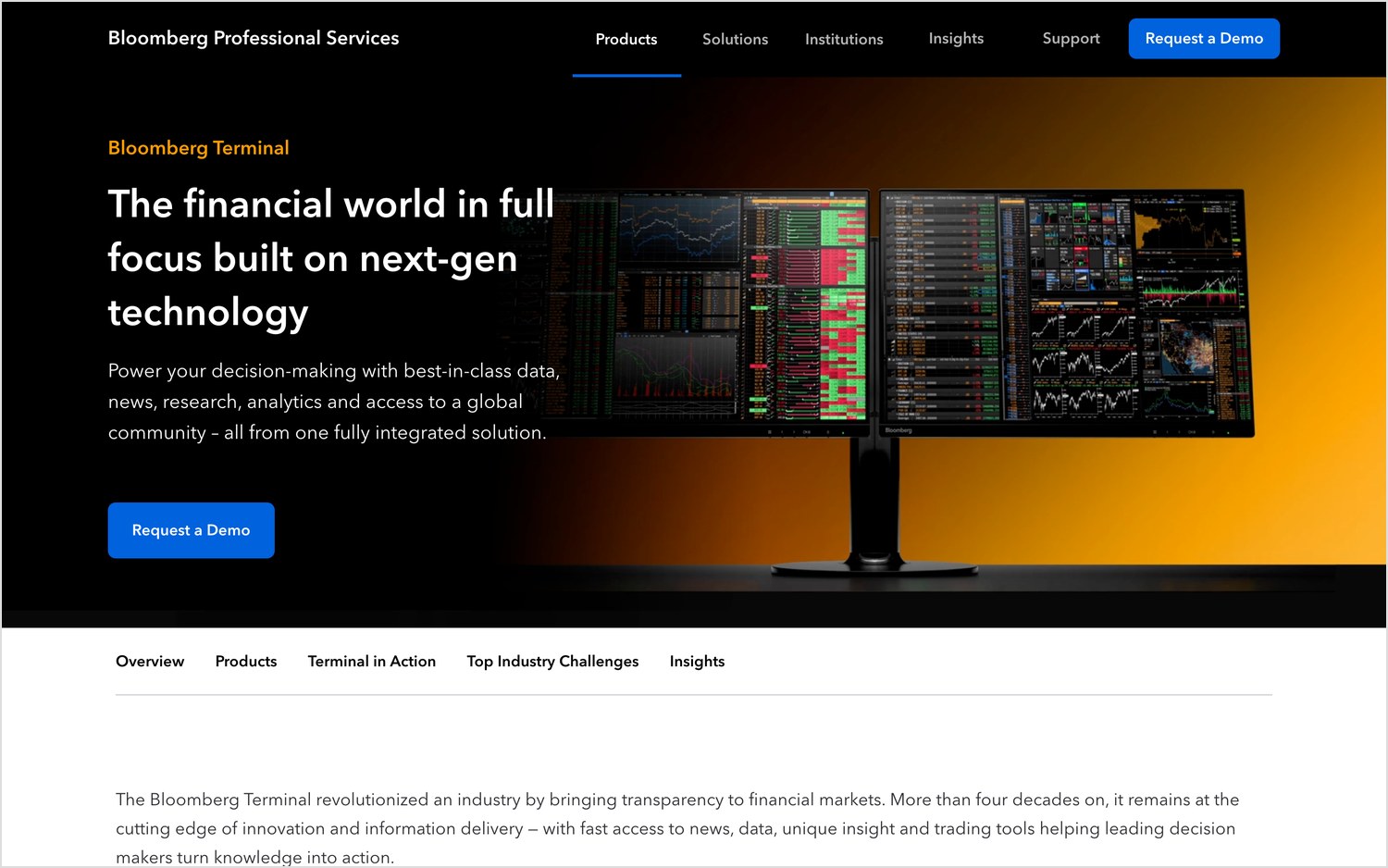
Bloomberg Terminal is a subscription-based financial data workstation built for traders, portfolio managers, and institutional analysts. The standard terminal includes real-time market data across major asset classes, Bloomberg News, analytics tools, messaging via IB Chat, and basic charting and screening tools. It covers 35 million+ financial instruments, spanning exchanges and OTC markets in more than 150 countries.
Getting that data into your own software is harder. Bloomberg has no public REST API, so a developer can't sign up, get a key and start pulling data. Servers and apps get Bloomberg data through enterprise products such as B-PIPE and Server API, sold under contracts separate from the Terminal subscription.
Bloomberg's news is sold the same way. Its Event-Driven Feeds turn Bloomberg stories into data that trading software can read, with a sentiment score on each story. None of it comes with a free trial, while several of the alternatives below let you try their data before you buy.
Why consider Bloomberg Terminal alternatives?
For fixed income, FX, and multi-asset institutional traders, Bloomberg is worth the price because IB Chat is where OTC bond trades are negotiated and Bloomberg's proprietary indices serve as benchmarks for hundreds of trillions in assets.
For everyone else, the cost is harder to justify. A Bloomberg Terminal costs about $32,000 a year per user, and it's made for one person at a desk, not for your own software. The API bundled with a Terminal subscription is meant for the person at that Terminal, and feeding its data into a server, an automated system or an AI agent needs a separate licence.
Getting Bloomberg's data into your own systems takes B-PIPE or Server API, its enterprise products. Both typically cost $50,000 to $200,000 or more a year, depending on data volume. For a data team that needs news with enrichment already applied, that cost structure is a poor fit regardless of coverage depth.
What are the best Bloomberg Terminal alternatives in 2026?
The table sets the Bloomberg Terminal next to the five alternatives below. Prices and plan limits are as of October 2026.
| Provider | API | Enrichment | Archive | AI use in the licence | Pricing |
|---|---|---|---|---|---|
| Bloomberg Terminal | BLPAPI SDK; REST only through Data License | Story-level sentiment in its enterprise news feeds | Decades of financial data | Server or automated use needs a separate licence | $31,980 per seat a year; enterprise feeds $50,000 to $200,000+ |
| NewsCatcher News API | REST, JSON; Python, TypeScript and Java SDKs | Sentiment, entities, topics and summaries (from July 2023) | From January 2019 | Yes, commercial use including AI systems | 7-day free trial, then custom |
| Opoint | REST; JSON, XML or CSV | Entities with LEI, FIGI and PermID; IPTC topics; sentiment in four languages | Not specified | Not specified | Not published; trial datasets available |
| LexisNexis (Nexis Data+) | REST, JSON; real-time, feeds or historical | Sentiment, entities and topics | 45+ years | Yes, sold as approved for generative AI | Not published |
| Signal AI | API for BI tools; MCP server for AI agents | Sentiment per company; risk and reputation scores | Not specified | Not specified | Not published |
| Webz.io | REST, JSON | Article-level sentiment | Up to 10 years (High Volume plan) | Not specified | Free plan, then pay as you go from $0.001 a call |
1. NewsCatcher News API
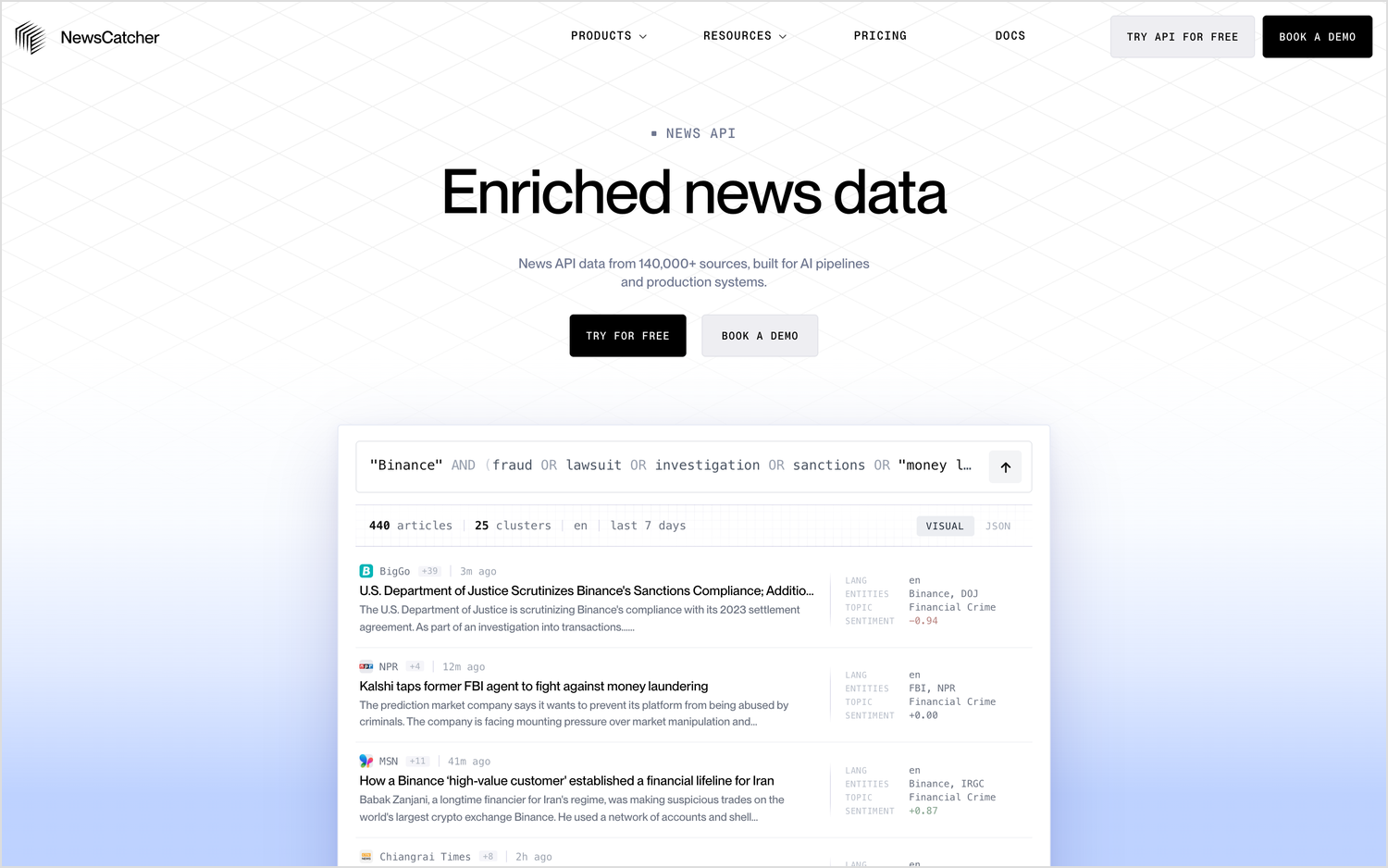
NewsCatcher's News API brings structured and enriched news that an app or AI agent can use straight away. Each article comes with labels already attached: its sentiment, the companies, people and places it names, its topics and a short summary. Its news archive goes back to January 2019, with labelled news content from July 2023.
- Pricing: 7-day free trial. Production plans are custom and depend on volume, sources and archive depth.
- Best for: Giving AI agents and models full news articles, already tagged and licensed for commercial use.
2. Opoint
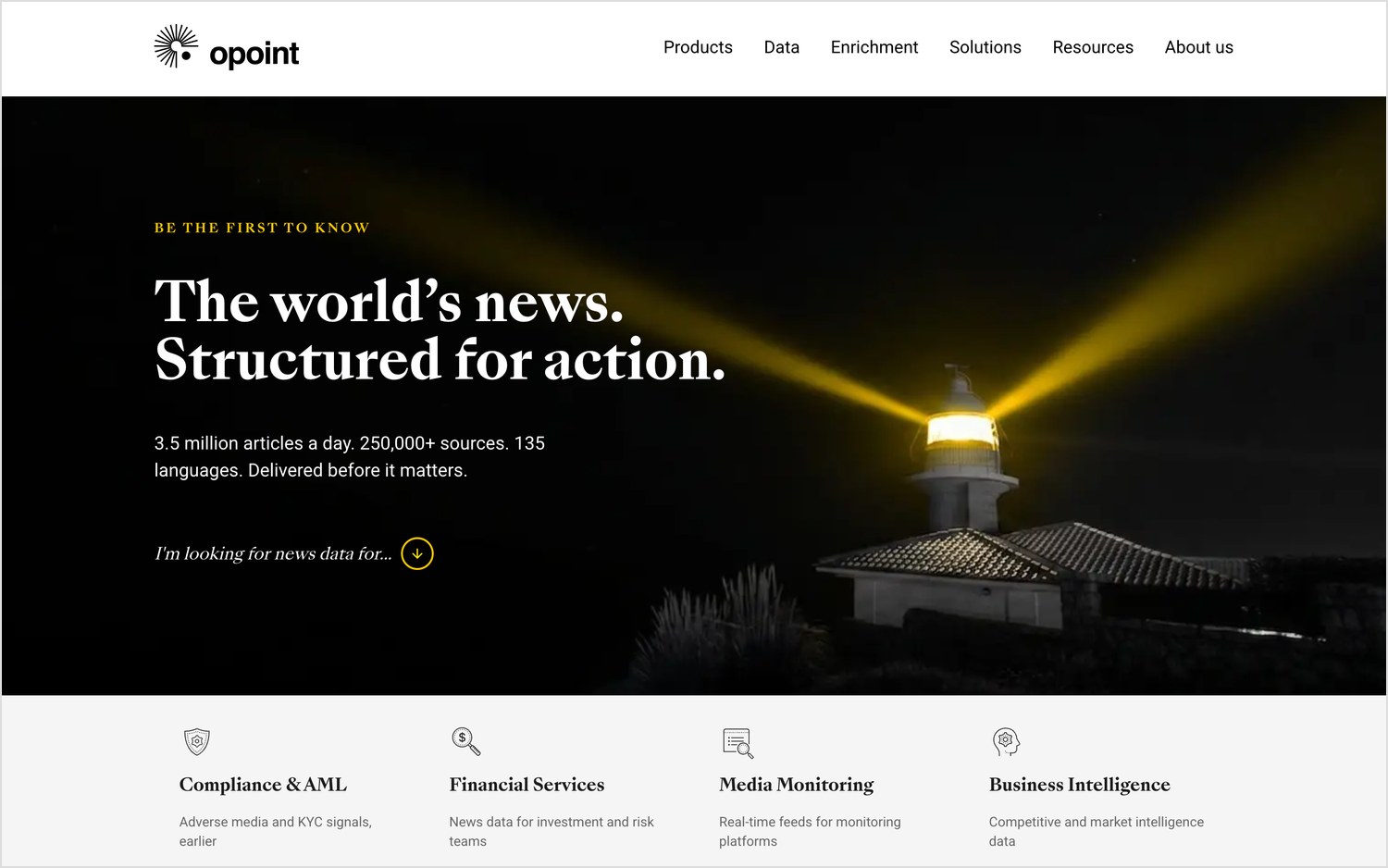
Opoint tags the companies named in each article with identifiers financial data teams already use, such as LEI, FIGI and PermID, and can estimate how many people read it. It collects articles from 250,000+ sources in 135 languages.
Apart from English, its sentiment scores cover only Scandinavian languages, so tone in other languages is left to you.
- Pricing: Not published. Opoint quotes each customer and offers trial periods.
- Best for: Matching news in many languages to the companies in a financial dataset.
3. LexisNexis (Nexis Data+)
Nexis Data+ opens LexisNexis's licensed news archive, more than 45 years of it, to code through a JSON API. Next to the publishers' articles it carries press releases, blogs and broadcast transcripts, and LexisNexis sells the content as approved for generative AI use.
Not every article includes its full text, since that depends on each publisher's licence. You can search Nexis Data+, take a continuous feed of new articles, or pull the archive in bulk.
- Pricing: Not published. Nexis Data+ is a separate contract from LexisNexis's research plans, priced after a call with their sales team.
- Best for: Grounding AI work in decades of licensed news from established publishers.
4. Signal AI
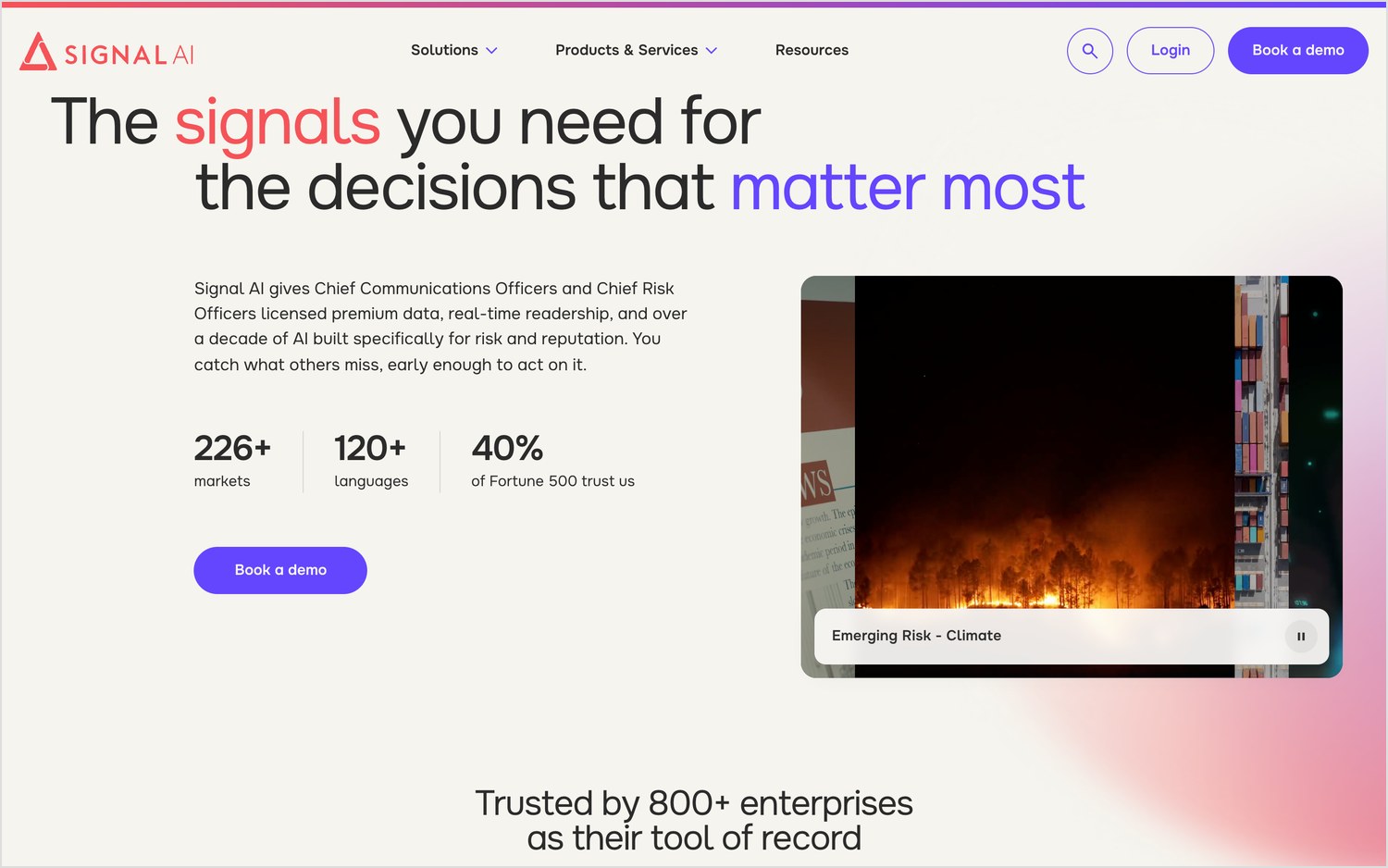
Signal AI is built for communications and risk leaders: dashboards and alerts on reputation and risk. It draws on licensed news and media from 226+ markets, scores each company and flags emerging events.
Teams that want the data in their own systems can use its API, built for BI tools, or its MCP server for AI agents. Sentiment is scored per company rather than per article, and full article text isn't part of what they offer.
- Pricing: Not published. Plans start with a call with their sales team.
- Best for: Briefing executives on reputation and risk from ready-made dashboards and alerts.
5. Webz.io
Webz.io looks well beyond news: its API covers blogs, forums, reviews and the dark web, as well as news from 300,000+ sites.
On the custom High Volume plan, their archive goes back up to 10 years. The free and pay-as-you-go plans come with limited history.
- Pricing: Free plan with $5 of usage credits a month, pay as you go from $0.001 a call, and custom pricing for the archive.
- Best for: Searching news together with forums and the dark web from one API.
Frequently asked questions
Is there a free alternative to the Bloomberg Terminal for news data?
To start with, yes. As of October 2026, Webz.io has a free plan with $5 of usage credits a month. NewsCatcher and Opoint offer trial periods. With LexisNexis and Signal AI, you start by talking to their sales team.
Can a news API get paywalled articles, like a Bloomberg Terminal does?
Only where the provider licenses them. A Terminal shows Bloomberg's own reporting alongside stories it licenses from other publishers. Of the alternatives here, LexisNexis's Nexis Data+ carries publishers' articles under licence, while an API that collects from the open web returns what the open web shows. Ask each provider which titles it carries in full.
What should I check during a news API trial?
Run the searches you'll run in production: your companies, languages and dates. Then read a sample of the results yourself. Are the right companies picked out, and does the sentiment match what you read? See whether copies of the same story come grouped or as duplicates. Depending on your needs, check how far back the archive goes for your topics, too.