










Introduction
Turning raw web search results into clean, machine-readable data is the hardest challenge in building AI pipelines today. Every time AI agents, LLM applications, and automation workflows pull results from the web, they get a mix of HTML fragments, inconsistent formatting, missing fields, and noise.
They struggle with this raw text because downstream software relies on deterministic rules. When an LLM processes raw HTML, its attention mechanism can easily mistake structural tags, hidden CSS elements, or ad injections for actual page content. Furthermore, retrieval of incorrect documents can lead to missing fields and fabricated values that no amount of prompt tuning can fix.
Getting reliable structured data extraction requires automated pipelines that convert unstructured web content into standardized, machine-readable JSON. Such a structured web data extraction pipeline depends on accurate JSON schemas, validation prompts, and retrieval quality.
How Does Structured Data Extraction from Web Search Results Work?
Structured web data extraction is the process of searching the internet for specific information and organizing it into a clear format, such as JSON. The pipeline follows these steps:
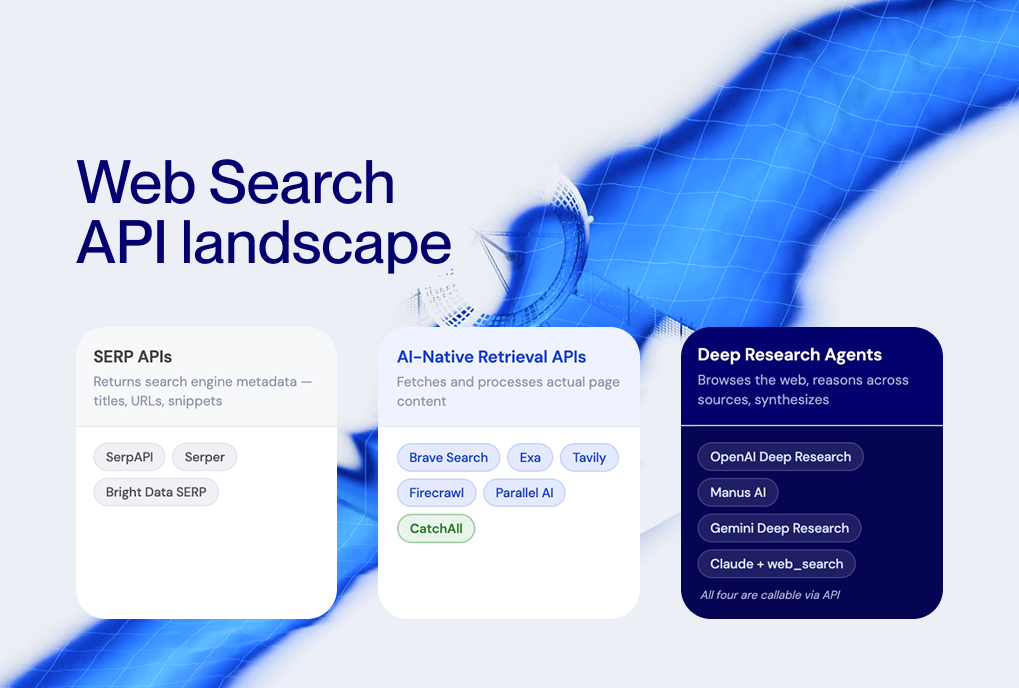
- Document Retrieval: The process begins with a search system that uses a web search API, such as CatchAll by NewsCatcher, to retrieve unstructured documents from the open web.
- Schema Injection and Parsing: The system then feeds this text into the context window of a language model, along with a predefined structure, like a JSON schema. The model acts as a context-aware parser and identifies key entities, numerical figures, and semantic relationships.
- Constrained Generation: Once the model processes the raw text, it formats the extracted facts to comply with the structured outputs protocol (grammar constraints like token masking) enforced during the token generation stage.
This schema-guided workflow transforms unstructured web content into usable data that can be easily integrated into downstream applications..
.png)
How Do JSON Schemas Improve Structured Data Extraction?
JSON schemas improve structured data extraction by acting as formatting templates. They prevent the language model from guessing how to organize its output. Instead, a schema tells the model what information to extract and what data type, like a string, integer, or boolean, to use.
A schema also explicitly defines required vs. optional fields. A required field forces the model to either find the value or flag it as missing, which prevents your downstream applications from crashing due to a missing key. Marking a field as optional gives the model room to capture extra details if they exist in the source text, without breaking the entire extraction if they are missing.
In modern development work, teams handle semi-structured data extraction with rigid JSON blueprints. Among the many JSON schemas examples used in practice, the one below shows an extraction schema for corporate acquisitions:
{
  "type": "object",
  "properties": {
    "acquirer_name": {
      "type": "string",
      "description": "Canonical name of the acquiring company"
    },
    "target_name": {
      "type": "string",
      "description": "Canonical name of the acquired company"
    },
    "deal_size_usd": {
      "type": "number",
      "description": "Announced deal value in USD. Omit if not reported."
    },
    "rationales": {
      "type": "array",
      "items": {
        "type": "string"
      },
      "description": "List of strategic rationales for the transaction"
    }
  },
  "required": [
    "acquirer_name",
    "target_name",
    "rationales"
  ]
}
However, having a precise schema won’t help if the system fails to retrieve the right web pages in the first place. So, to overcome this and build reliable pipelines, you can use web search APIs to retrieve a more complete set of relevant web documents and maximize the factual coverage of their schemas.
What Are Validation Prompts and Why Do They Matter?
JSON schema validation prompts are natural language instructions. They guide a secondary independent model to audit extracted JSON fields for factual accuracy and logical alignment with the source text.
While JSON schemas control output syntax, they can't verify if the model fabricated a number or ignored facts. A validation workflow addresses this by passing extracted JSON and raw documents to a validation model. This secondary layer checks for logic errors, verifies field completeness, and greatly reduces hallucinations by requiring verbatim textual evidence for every attribute.
To keep validation workflows strong, teams use multi-step pipelines that separate the research phase (data collection) from the analysis phase (extraction and validation). This isolated architecture prevents expensive API retry loops and protects against silent generation failures.
.png)
Here is a practical example of a validation prompt for auditing the corporate acquisition schema.
System: You are a strict data validation agent. Your task is to verify that the Extracted JSON perfectly aligns with the Source Text.


Rules:
1. You must not use outside knowledge.
2. Every value in the Extracted JSON must have verbatim textual evidence in the Source Text.
3. If a value is inferred or hallucinated, mark it as an error.


Source Text: {raw_search_snippet}
Extracted JSON: {extracted_json_payload}


Task: Evaluate the extraction and return a JSON object using the following schema:
{
  "is_valid": boolean,
  "hallucinated_fields": ["list", "of", "keys"],
  "explanation": "Brief explanation of any failures."
}
What Can Go Wrong During Structured Extraction?
Structured extraction pipelines fail due to unexpected API token truncation, incomplete document retrieval, and static validation logic that misses semantic errors.
Why Do LLMs Return Invalid JSON?
Models return invalid JSON most often because of output length limits, schema complexity, or conflicts between the extraction task and the model's default generation behavior. Some common failure modes include:
Why Does Structured Data Contain Hallucinations?
Structured data can contain hallucinations because LLMs prioritize meeting schema requirements over strictly adhering to the source text. If a schema marks "CEO_Name" as a required field, and the source text does not mention the CEO, the model will often fabricate a name to satisfy the schema constraint.
Models also suffer from severe confidence issues when faced with incomplete source material. If the search layer fails to retrieve the document containing the actual answer, the LLM rarely admits that it cannot find the data. Instead, it confidently fills the field using outdated information from its pre-training data, presenting a fabricated guess as a verified fact.
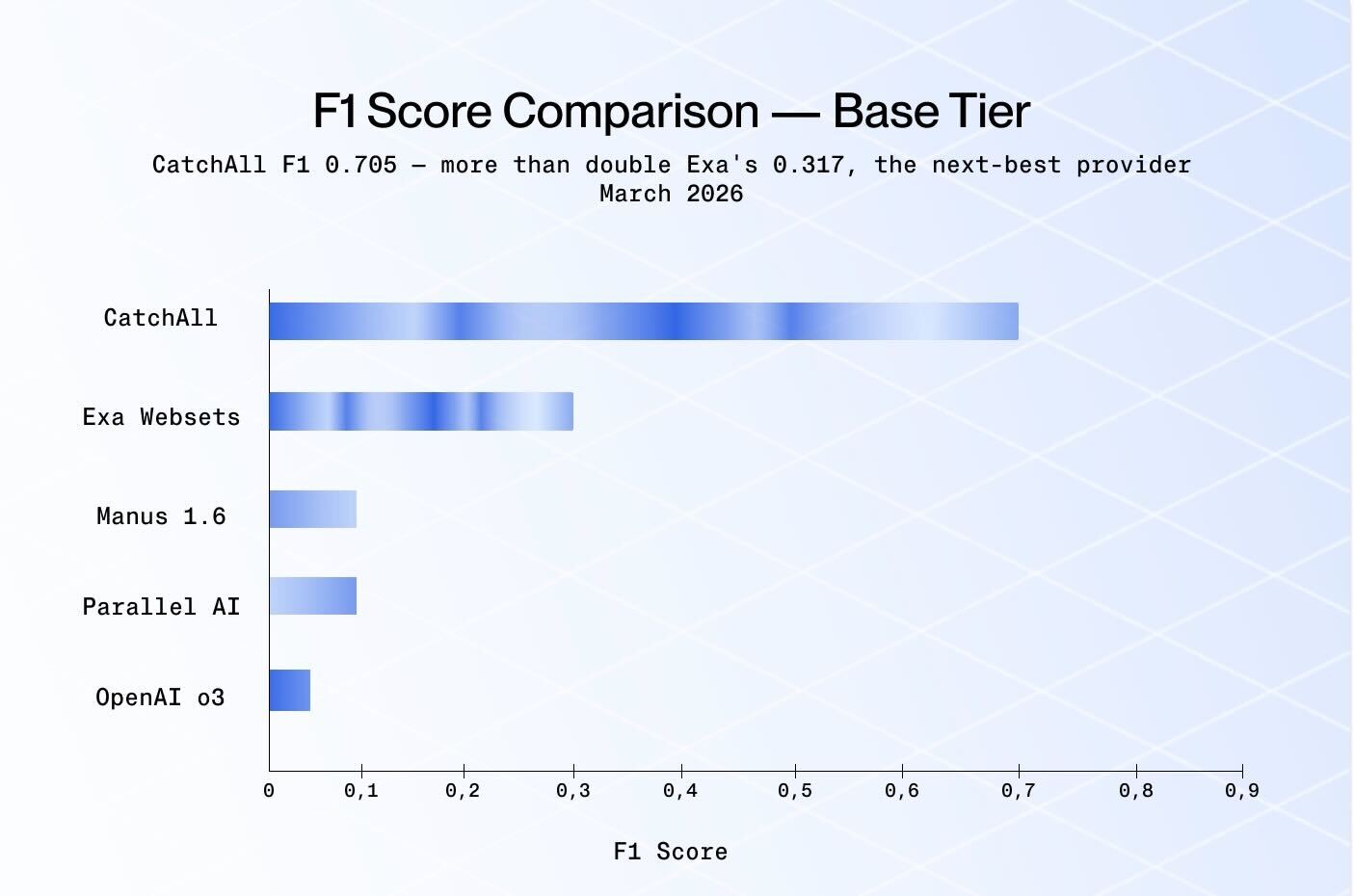
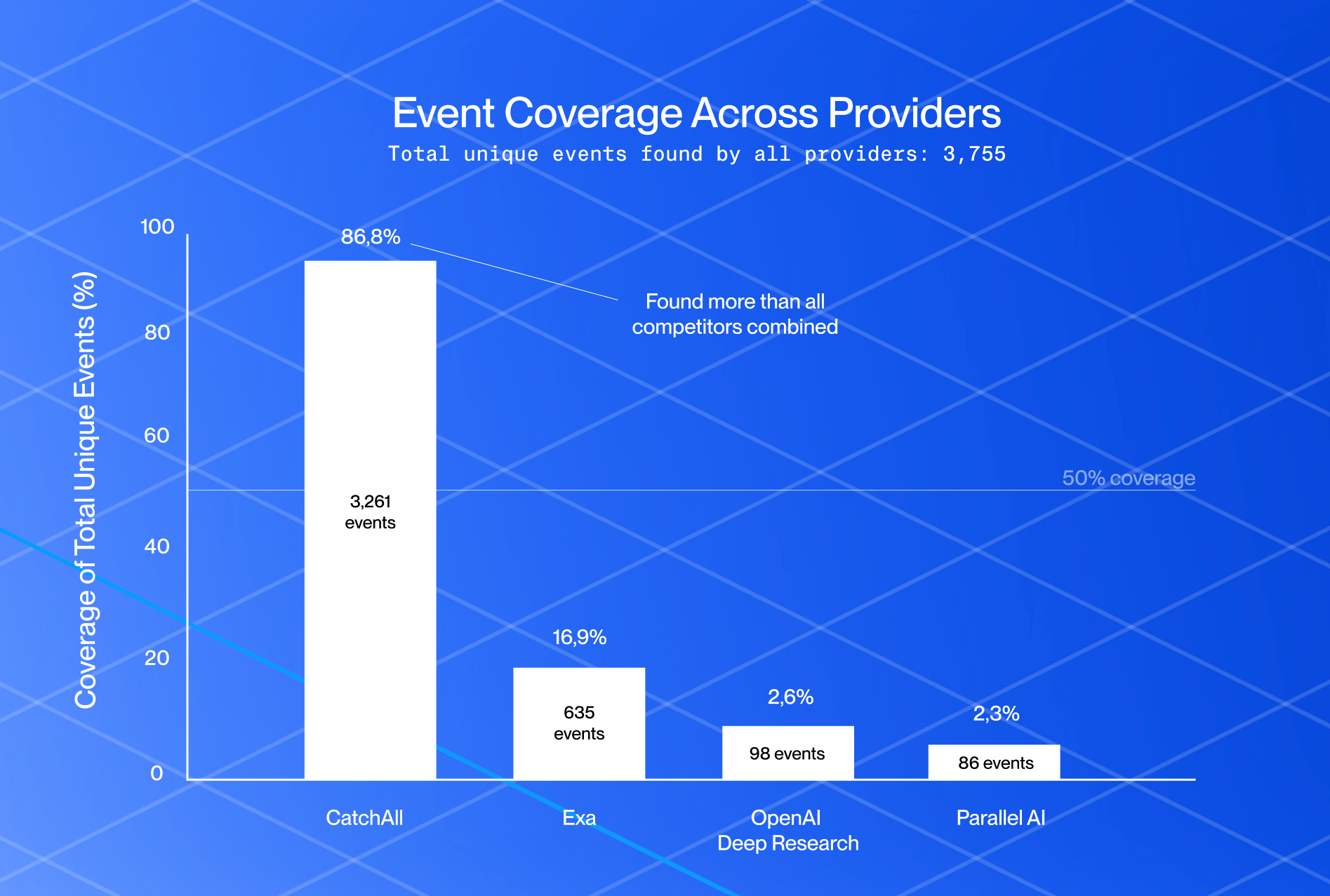
There are two fixes to prevent this. First, improve retrieval using a recall-first web search solution like CatchAll, so the source material actually contains the needed information. And secondly, you can add validation prompts that explicitly check source grounding for each field.
How Do Missing Search Results Affect Extraction Accuracy?
Missing search results degrade extraction accuracy because the structured extraction pipeline cannot process information that was never retrieved from the web. When search engines miss critical web documents, LLMs generate empty fields or hallucinate to meet schema requirements.
In high-stakes fields like regulatory monitoring or risk assessment, missing a single source creates severe operational blind spots. Therefore, the structural completeness of any semi-structured data extraction pipeline is dependent on the coverage and recall of the search layer.
Note: JSON schemas and validation prompts can improve output quality, but they cannot fix missing data. To prevent hallucinations and extraction errors caused by insufficient source material, you must use a recall-first web search solution like CatchAll. It ensures AI agents and extraction systems retrieve a more complete set of relevant documents before structured extraction begins.
How Does Search Recall Affect Structured Extraction?
Search recall is a major bottleneck in structured data extraction pipelines. Because low document coverage limits the factual scope of the LLM and renders the best schemas and prompts ineffective.
Most search APIs fail at this because of the prioritization to return the top-ranked results, which caps the amount of data your system receives. But, machine workflows and AI research agents require high recall to find all instances of distributed facts, such as compiling every corporate acquisition or cybersecurity event across the open web.
When search recall is low, AI systems miss important target data, leave the extraction engine blind to critical signals, and hallucinate to satisfy the schema. So, to prevent data loss, implement recall-first retrieval strategies. They provide a retrieval layer that maximizes source coverage and lets your LLM access the comprehensive dataset before structured extraction.
Summary
Custom structured data extraction depends on high-quality retrieval, rigid schema enforcement, and aggressive validation logic working in unison.
You must eliminate variables at every step of the pipeline. Define exact output parameters using strict JSON blueprints. Route extracted data through secondary validation prompts to verify source grounding and syntax accuracy.
Importantly, ensure your system processes a more complete set of source documents. The most advanced extraction prompt will fail if the underlying search API fails to retrieve the necessary data.
- Documentation: newscatcherapi.com/docs/web-search-api/get-started/introduction
- Questions? Email us at support@newscatcherapi.com
- Further Reading









.png)


.png)