










Keeping tabs on competitors sounds straightforward until you're actually doing it. Track what, exactly? Turn it into decisions, how? This guide goes through what competitive intelligence actually involves, where the information comes from, and which parts you can automate.
TL;DR:
- Competitive intelligence is the continuous process of tracking competitors, market changes, and pricing signals to inform strategy.
- CI covers four types: tactical, strategic, technical, and market intelligence, with most programs drawing from all four.
- Job postings, regulatory filings, and news monitoring are secondary sources that often surface competitor moves well ahead of any official announcement. However, most teams underinvest in using them.
- AI-powered pipelines replace manual scanning by ingesting thousands of sources in real time, covering pricing changes, filings, and executive commentary simultaneously.
What is competitive intelligence?
Competitive intelligence is the systematic work of gathering, analyzing, and acting on information about your competitive environment so that strategic decisions rest on evidence. In practice that often means competitor moves, market shifts, regulatory changes, pricing signals, and customer behavior. The things that affect where your company stands relative to everyone else.
The practice has become a core business function for many companies. In April 2026 Gartner published its first Magic Quadrant for Competitive and Market Intelligence Platforms. That typically only happens once a category has the buyers, vendor revenue, and maturity to justify it.
What are the goals of competitive intelligence in business?
The goals of CI vary by company and team, but they all come down to this: turning raw market information into a tool for decision making. For a practitioner-level breakdown, the Competitive Intelligence Alliance's complete guide is a useful reference.
Most businesses pursue a mix of these:
- Anticipate competitor moves early enough to prepare a response, instead of getting caught by surprise.
- Spot market gaps and opportunities your competition has overlooked.
- Reduce strategic risk by grounding major decisions in external data rather than just internal assumptions.
- Track changes in things like customer sentiment, pricing, and product positioning across your industry.
- Give sales and marketing teams up-to-date intelligence on weaknesses and positioning changes of your competitors.
- Align product roadmap decisions with what the market is actually doing, not with whoever argues hardest in the planning meeting.
What are the types of competitive intelligence?
It's common to divide competitive intelligence into four categories, based on what they track:
- Tactical intelligence is the near-term layer: pricing changes, product launches, campaign adjustments, the things a competitor did this month.
- Strategic intelligence watches the slow variables. Competitor positioning, market entry moves, shifts in business model or leadership.
- Technical intelligence follows R&D output, patent filings, and what a competitor's product can actually do.
- Market intelligence is the widest lens, covering industry trends, customer demand patterns, and the regulatory or macro changes that move the whole category.
| Type | Focus area | Time horizon | Example use |
|---|---|---|---|
| Tactical | Near-term activity: pricing changes, product launches, campaign adjustments | Weeks to months | Adjusting pricing in response to a competitor's promotional offer |
| Strategic | Long-term competitor positioning, business model changes, leadership changes | 1-3 years | Assessing a competitor's market expansion plans before entering a new region |
| Technical | R&D output, patent filings, product capabilities | Months to years | Tracking patent filings to anticipate a competitor's next product area |
| Market | Industry-wide trends, customer demand patterns, regulatory and macro changes | Ongoing | Monitoring category growth or decline to inform portfolio decisions |
Most CI programs draw on all four and weight them by the decision at hand.
How does competitive intelligence differ from market research?
Market research and CI tend to get lumped together, and definitions vary. While there might be some overlap, it's useful to distinguish between the two. Market research is primarily a discipline that tells you what customers want and how demand is shaped. CI tells you what your competition is doing about it, and what they're likely to try next.
Market research is also project-based: a survey, a segmentation study, a voice-of-customer exercise with a defined start and end. CI is ongoing, and has no end date; it picks up signals as things shift.
| Dimension | Competitive intelligence | Market research |
|---|---|---|
| Scope | Competitors, market actors | Consumers, demand, buying behavior |
| Timing | Continuous | Project-based, periodic |
| Methodology | Open-source monitoring, expert networks, signals analysis | Surveys, focus groups, structured data collection |
| Output | Actionable intel on competitor moves and positioning | Insights on customer needs and market sizing |
Both feed strategy, but they cover different blind spots. Market research can tell you a segment is growing and say nothing about the two competitors who already staffed a team for that market. CI, on the other hand, can tell you a competitor just repriced and say nothing about whether buyers care. Running both together is how teams cover what each approach misses on its own.
What are the main sources of competitive intelligence?
CI sources split into two tiers, and the trade-off between them is effort against scale. The catch with the scalable half is that you're constrained to working with whatever competitors chose to make public.
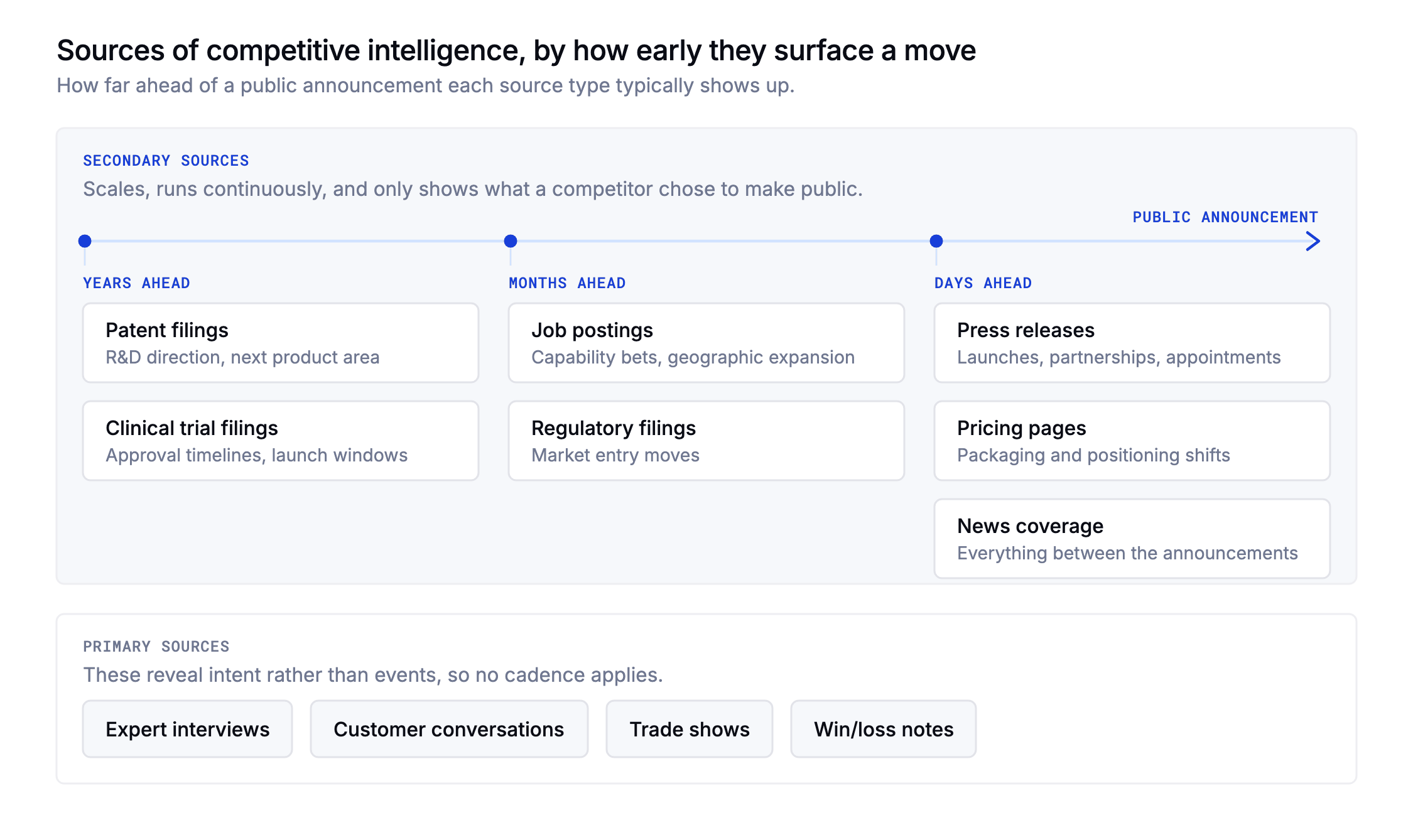
Primary sources take direct effort, and they surface the intent and context published data rarely reveals. Expert interviews get you strategic intent and roadmap indicators. Customer conversations show how buyers actually perceive competitor strengths and weaknesses. Trade show walks turn up unreleased products and partnership cues, and your own win/loss notes carry pricing tactics and the objections reps keep hearing.
Secondary sources are scalable and continuous: SEC and public filings (financial health, stated strategic priorities), job postings (capability build-out, technology bets, geographic expansion), patent databases (R&D direction, future product areas), press releases (launches, partnerships, executive appointments), regulatory filings (market entry moves, approval timelines), and news and web monitoring (real-time competitor activity, sentiment changes).
The secondary tier is where most teams underinvest in tooling. Job postings alone can reveal a competitor's next product area months before they actually announce it. Regulatory filings tell you where they're expanding. News monitoring with a news API catches the signal between the announcements.
How is competitive intelligence gathered?
CI collection works best as a cycle you can repeat. Each stage of the cycle has a distinct job. Skipping one shows up in the quality of what comes out.
- Planning: Start by defining the decision you need to support: who needs it, by when, and with what level of depth. Begin with the highest-stakes decisions rather than the easiest data to gather. Precise questions produce better collection.
- Collection: Pull from the sources that fit the question. Primary research (interviews, win/loss calls) takes more effort but reveals intent. Secondary sources (filings, job posts, news) run faster and can run continuously. A news API is the usual way to make the news half of that continuous.
- Analysis: Turn the raw material into a judgment. What does it tell you about competitive position or risk? What decision does it change?
- Dissemination: Get the findings to decision-makers in a format they can act on: a weekly briefing, a Slack alert, or a short report.
- Feedback: After sharing the output, check whether it was useful. What informed a decision? What was missing? Use the answers to improve the next cycle before you run it again.
Running the cycle on a consistent schedule gives CI a fixed place in planning, so findings reach decision-makers regularly instead of arriving only when a major decision forces the issue.
What frameworks are used to analyze competitive intelligence?
A framework is the shape analysis takes once collection is running: a structured way to turn the signals you gathered into a judgment someone can act on. Most day-to-day CI runs on simple formats, a weekly digest, a battlecard, an alert with a recommendation attached. When a bigger decision is on the table, a market entry or a launch against a named competitor, working through an established framework is the right call.
Three frameworks come up most often for those decisions:
| Framework | Core question it answers | What it needs from your collection | Output |
|---|---|---|---|
| Porter's Four Corners | What is this competitor likely to do next? | Job postings, product launches, pricing changes, executive commentary | A predicted response you can plan around before a launch or market entry |
| SWOT analysis | Where do we stand against this competitor right now? | Feature and pricing comparisons, win/loss notes, customer review sentiment | A one-page position summary; most CI tools now generate these automatically |
| Scenario analysis | How does our position hold up if conditions shift? | Regulatory filings, market entry signals, and trend data accumulated over months | A tested response for each plausible future |
What is the difference between competitive intelligence and corporate espionage?
Competitive intelligence stays inside legal, ethical research methods. Corporate espionage doesn't. It covers theft, bribery, and unauthorized access to systems, all in pursuit of information a competitor never chose to share.
Where's the line? Simpler than most people expect. If the information is publicly available, or someone handed it to you voluntarily, collecting it is fair game. The moment you need deception or lawbreaking to get it, you've crossed into espionage.
The consequences aren't civil, either. Most jurisdictions treat corporate espionage as a crime, and the United States wrote that into the Economic Espionage Act of 1996, which puts federal fines and prison time behind trade secret theft.
How is competitive intelligence applied in pharma, marketing, and strategic management?
What CI looks like depends on who is running it. Three contexts come up most often: pharma, marketing, and strategic management. Different inputs, different cadence, and a different decision waiting at the end of the pipeline.
- Pharma: the raw material is clinical trial filings, FDA approvals, competitor pipelines, and patent expirations. Out the other end come pipeline gap analyses, launch timing strategy, and regulatory risk maps.
- Marketing: teams watch competitor campaigns, pricing pages, messaging changes, and ad spend signals, then turn them into positioning briefs, differentiation angles, and campaign adjustments.
- Strategic management: M&A filings and automated trackers, executive hires, market entry signals, earnings disclosures. Those feed investment theses, market entry playbooks, and scenario plans.
The stakes differ too. A competitor reaching Phase 3 trials can reshape pharma commercial strategy years before any drug launches. Landing pages and ad copy shift week to week, which is the cadence marketing lives on. And strategic management owns the longest lead times of all, where spotting competitor investment patterns early (including recent AI M&A deals) is often the only way to respond before the opportunity closes.
How does AI change competitive intelligence collection and analysis?
AI is turning competitive intelligence from a periodic research project into continuous, automated monitoring. Many businesses now run collection as a pipeline ingesting thousands of sources in real time, replacing the scanning an analyst once spread across days of news sites, earnings calls, and industry reports.
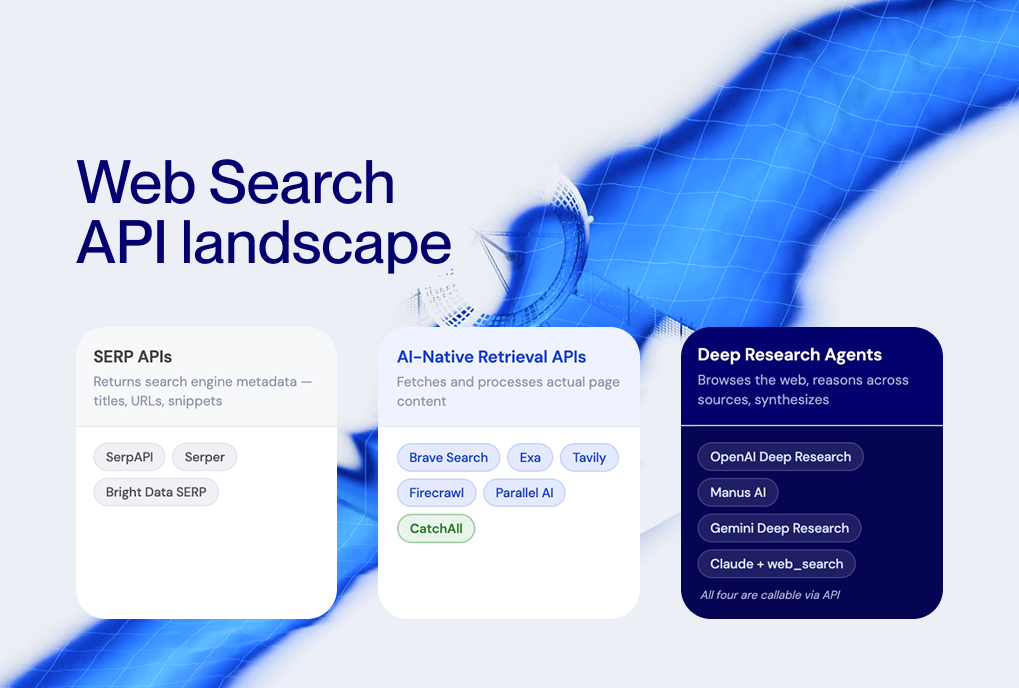
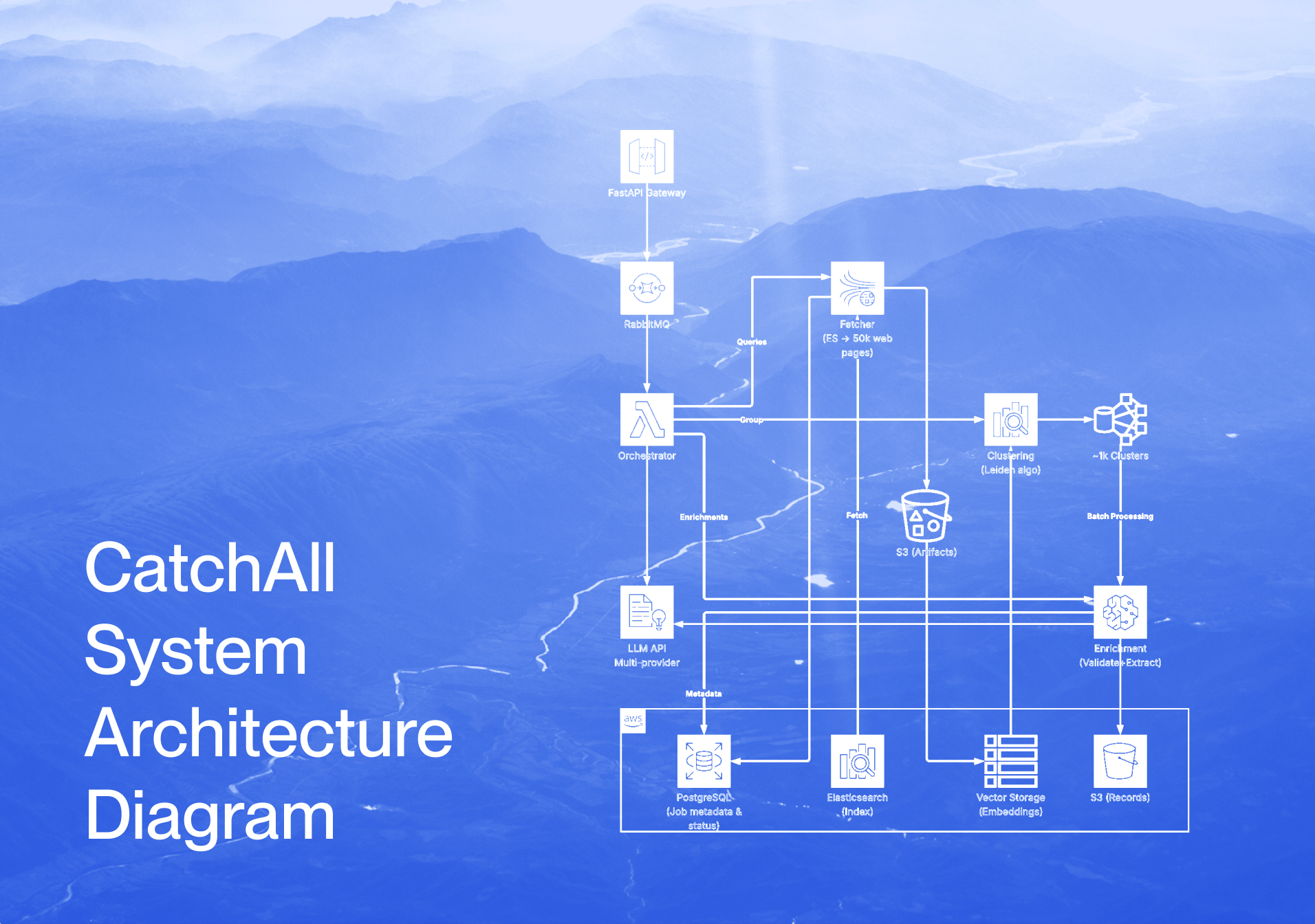
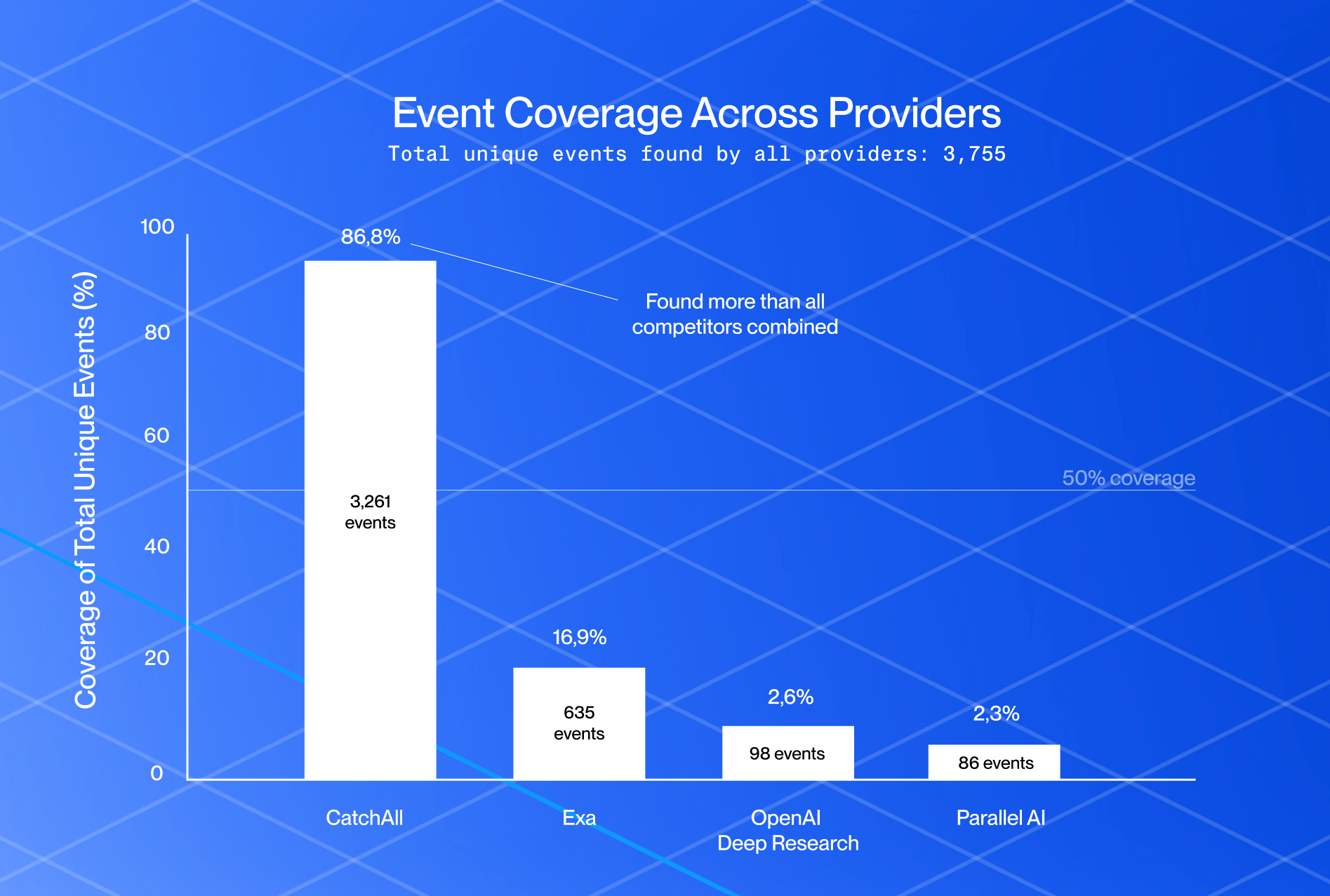
The core gains of using AI for competitive intelligence are speed and coverage. AI can track competitor pricing changes, product launches, executive commentary, and regulatory filings simultaneously, across more sources than any human team could read in full. Teams increasingly rely on web search APIs for this kind of monitoring; we've written a rundown of how investment teams use them for market intelligence. CatchAll is one of them: it works through an index of more than two billion pages and returns structured event records with their sources attached, rather than a ranked page of links to read through. A thorough run takes around fifteen minutes, and scheduled monitors re-run anywhere from daily to hourly depending on plan.
Frequently Asked Questions
What are the main goals of competitive intelligence in strategic management?
In strategic management, CI feeds three outputs: investment theses, built by reading competitor investment patterns before they become public commitments; market entry playbooks, for windows that close once someone else moves; and scenario plans that stress-test your assumptions against what competitors are actually doing. One test tells you whether the program works: do findings reach decision-makers before the commitment gets made, or after? A monthly briefing nobody acts on usually means the right topics are landing in the wrong format, or with the wrong audience.
What are the best sources of competitive intelligence for tracking competitor moves in real time?
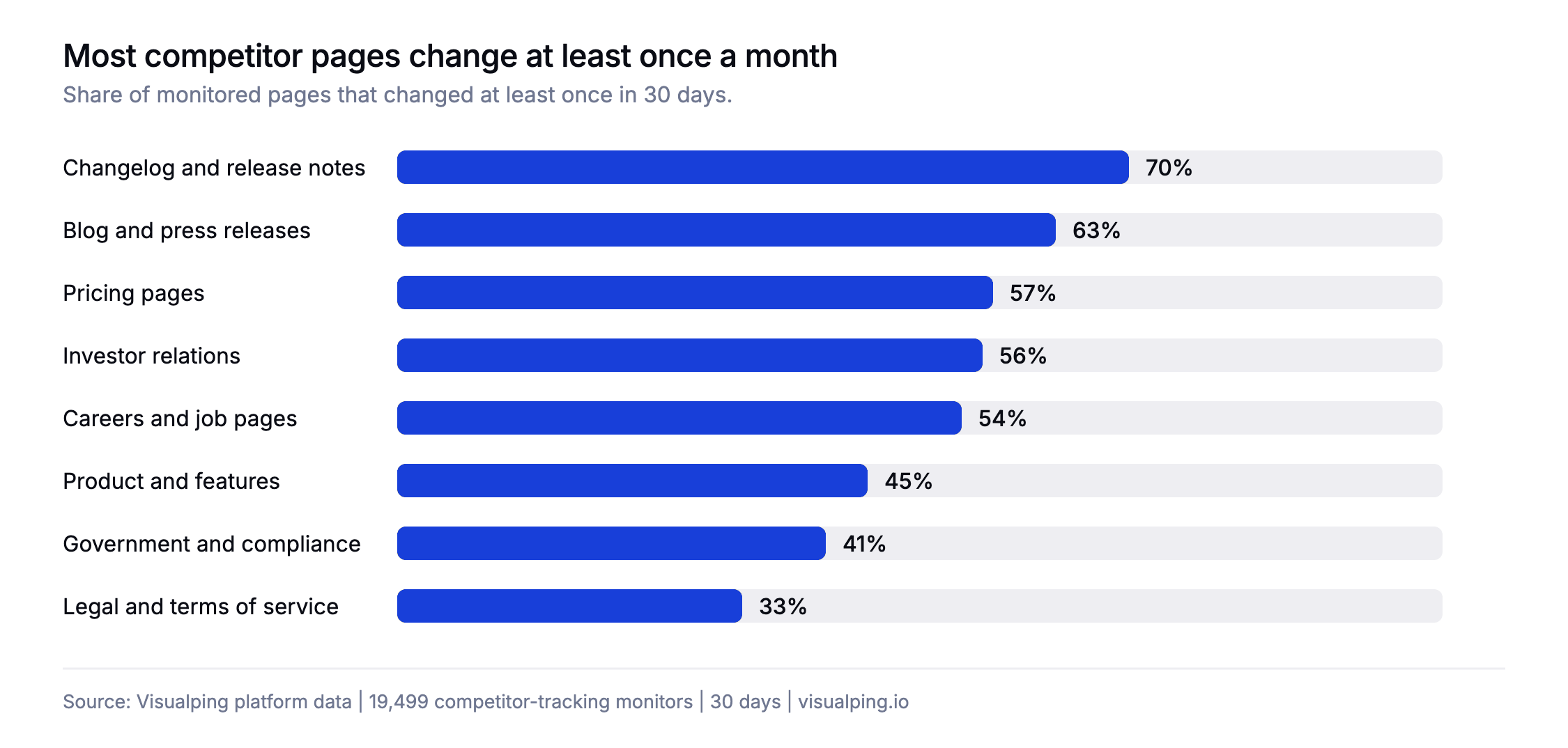
The most reliable real-time sources are job postings, press releases, pricing pages, and regulatory filings. Each moves at its own speed, which is the detail most teams miss. Job postings give you the longest warning, surfacing early signals of where a competitor is building next; a role in a vertical they haven't entered yet is a consistently reliable indicator. Press releases and pricing pages deserve a daily check. Regulatory filings publish on fixed schedules, so weekly is enough. News monitoring fills whatever falls between those, from executive commentary to partnership announcements to market reactions. Match your review cadence to how fast each source actually changes rather than treating them all identically.
How to use competitive intelligence with a new product launch?
CI for a product launch runs in three phases, and the last one gets skipped most. Before launch, map competitor pricing, positioning, and any messaging gaps your product can fill. During launch week, watch for the response: pricing page changes, new content aimed at your keywords, sudden hiring in adjacent product areas. Then keep monitoring for another two to four weeks, because that window is where most counter-moves land. Keeping that post-launch window open gives teams time to adapt before competitor responses gain traction.





.png)

.png)