










Google Alerts is free and takes about two minutes to set up, so most teams start there. The problems show up later: missed mentions, indexing lag of up to 72 hours for newer or lower-authority pages, no API, and no machine-readable data format for downstream pipelines. If you're ready to move on, here's how the real alternatives stack up.
TLDR:
- Google Alerts has no API, no webhook delivery, and delays of 24 to 72 hours, which disqualifies it for production pipelines.
- Its PageRank-biased index frequently misses government portals, regulatory bulletins, and niche trade publications.
- Pricing ranges from a free tier capped at 150 requests/month (Perigon) to quote-only enterprise contracts (Contify, Signal AI), so your budget narrows options fast.
- All five alternatives run recurring monitors with webhook delivery; what separates CatchAll is Leiden-based event clustering and custom validators that filter results before delivery.
- Webz is the only option here with pre-2019 historical archives, making it the fit for one-time research on older data.
What is Google Alerts and how does it work?
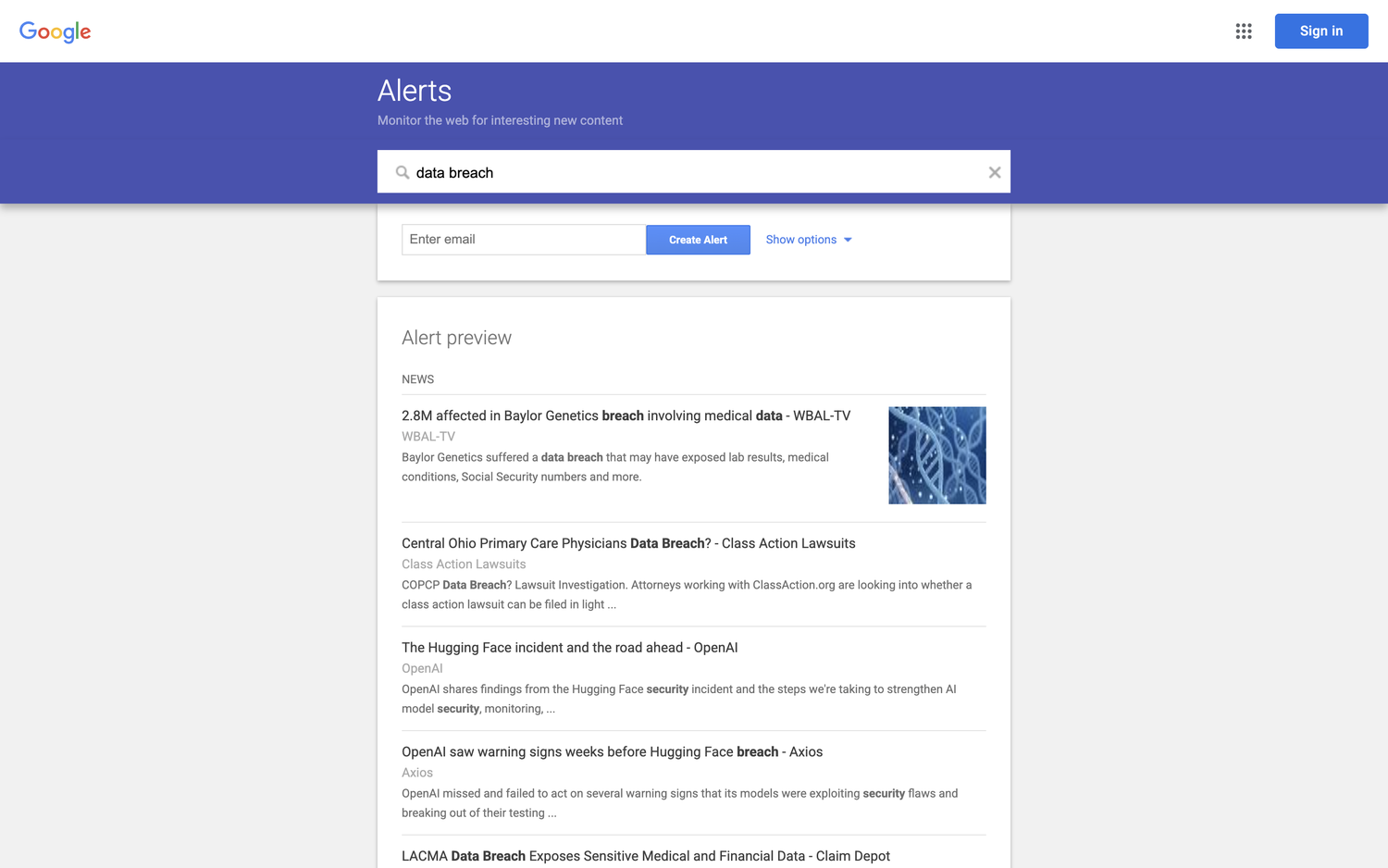
Google Alerts is a free keyword monitoring tool from Google that sends email notifications when new web content matching your search terms gets indexed. The mechanics are straightforward: Google monitors keywords across newly indexed content, and when a matching page is found, you get an email.
There is no API. You can switch delivery from email to an RSS feed, which some teams automate against, but it's an undocumented workaround tied to your session, with no structured fields, no historical access, and no delivery guarantees. There is no dashboard.
The tool was built for individuals and small teams who want passive awareness of brand mentions, competitor news, or topic coverage without any technical setup.
Why consider a Google Alerts alternative?
Google Alerts works well enough if you need passive awareness and have no downstream system to feed. Setup takes minutes, costs nothing, and covers a wide swath of the indexed web. For a solo founder tracking their brand name, it's fine.
But teams outgrow it quickly. Missed mentions are a persistent issue: Google Alerts can only surface content after Google indexes it, and that indexing lag can run 24 to 72 hours for newer or lower-authority pages. The tool also has coverage gaps that compound over time.
For engineering and data teams, the technical gaps are harder to work around. There is no API for alerts, no webhook delivery, and no machine-readable output. Every signal arrives as an email, which means manual extraction before anything can feed into a pipeline or AI workflow, and that alone disqualifies it for production use.
Coverage is also uneven. Google's index favors high-PageRank domains, so state regulatory bulletins, agency sub-pages, and niche trade publications are frequently missed. If your monitoring scope includes government sources or specialized press, you will see gaps that email volume alone won't reveal.
What are the best Google Alerts alternatives in 2026?
The five alternatives below cover the range from developer APIs to enterprise CI dashboards, at price points from free to enterprise contracts. NewsCatcher leads as the strongest structural replacement for Google Alerts' email-only output.
| Feature | NewsCatcher | Signal AI | Contify | Webz | Perigon |
|---|---|---|---|---|---|
| Structured JSON output | Yes | Enterprise contract only | Yes | Yes | Yes |
| Full article body text | Yes | No | Summaries and metadata | Yes | Yes |
| Leiden event clustering | Yes (CatchAll) | No | No | No | Story grouping only |
| Custom pre-delivery validators | Yes (CatchAll) | No | No | No | No |
| Source count | 140,000+ | Undisclosed | 1M+ sources | Broad crawl | ~220,000+ |
| Pre-2019 historical archives | No | No | No | Yes (since 2008) | No |
| Free or self-serve entry tier | CatchAll: yes; News API: no | No | Quote only, 7-day trial | Yes ($5 credits/mo) | Yes (150 req/mo free) |
| SOC 2 Type II | Yes | Undisclosed | Yes (type not stated) | Undisclosed | Undisclosed |
NewsCatcher
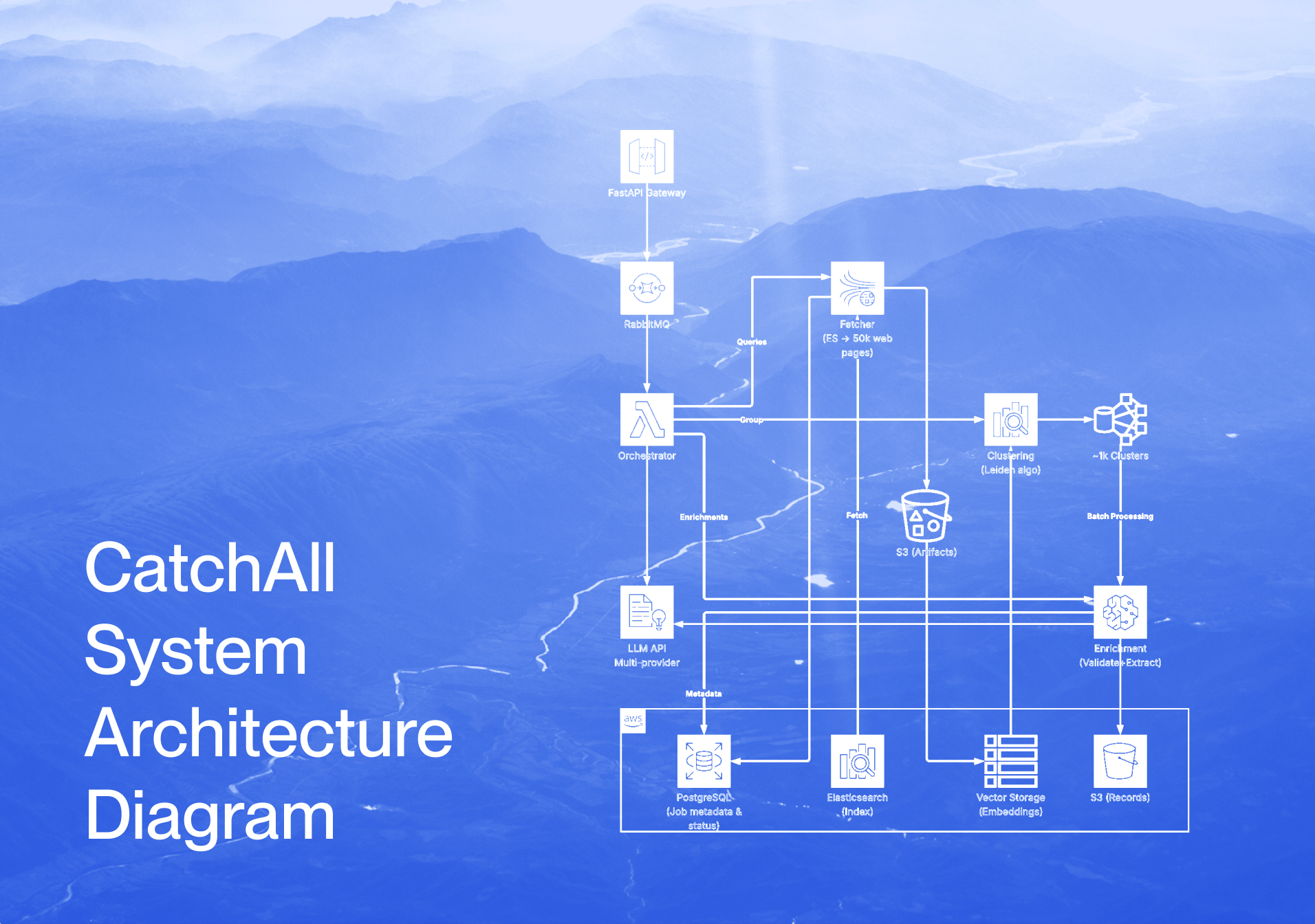
NewsCatcher offers two products as a structured replacement for Google Alerts' email-only output. The News API delivers article-level search across 140,000+ sources with full body text, AI-powered entity disambiguation, and SDKs in Python, TypeScript, and Java. CatchAll adds event-level discovery with Leiden-based clustering to deduplicate syndicated coverage, custom pre-delivery validators, and recurring monitors that push only new results via webhook, following an event-driven web search model. SOC 2 Type II certified with MCP support for Claude included.
Best for: AI/ML engineers building agentic workflows, risk and compliance teams, and data teams running high-volume recurring monitors.
Signal AI
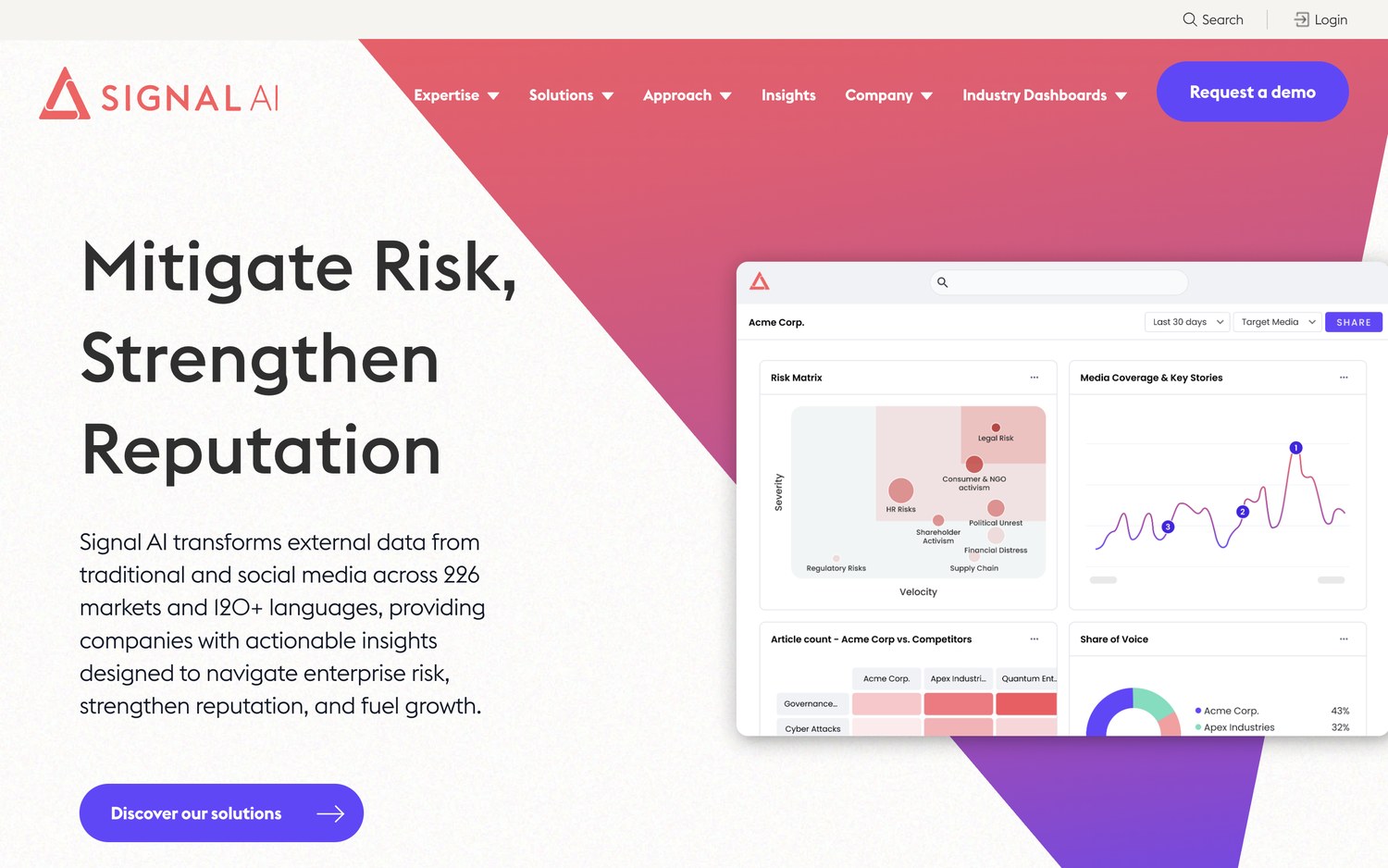
Signal AI monitors global media across 226 markets and 120+ languages, with entity-level sentiment scoring and a risk scoring system aimed at PR and communications teams. API access comes through an enterprise contract rather than a self-serve developer tier, and it does not deliver full article body text. Pricing requires direct contact. Good for enterprise communications teams; limited for developers needing structured output.
Contify
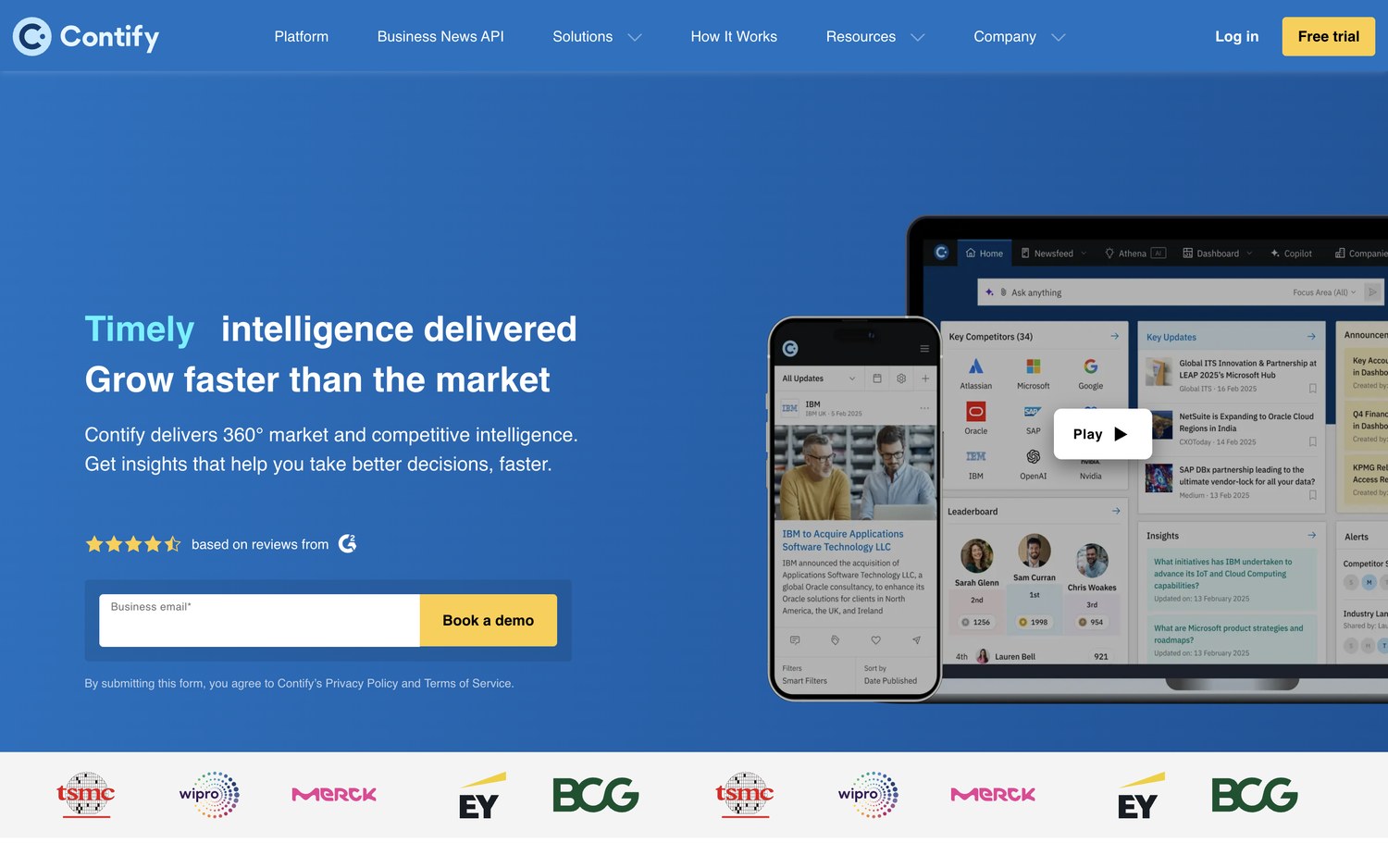
Contify pulls intelligence from over 1 million vetted external sources, including SEC filings, social media, and regulatory portals. It produces auto-updating dashboards and battlecards via its Athena AI engine, and its Business News API delivers structured JSON output via REST endpoints and webhooks. Pricing is quote-only with a 7-day free trial available, and taxonomy setup requires substantial upfront investment. Best for enterprise CI teams building internal intelligence repositories.
Webz
Webz (webz.io) indexes news, blogs, forums, and dark web content, with historical archives reaching back to 2008. Its primary differentiator is depth of historical coverage and flexible one-time purchase options, and it returns full article text with structured metadata. It does not offer Leiden-based event clustering or custom pre-delivery validators, so deduplication stays in your pipeline. Best suited for research requiring pre-2019 archives.
Perigon
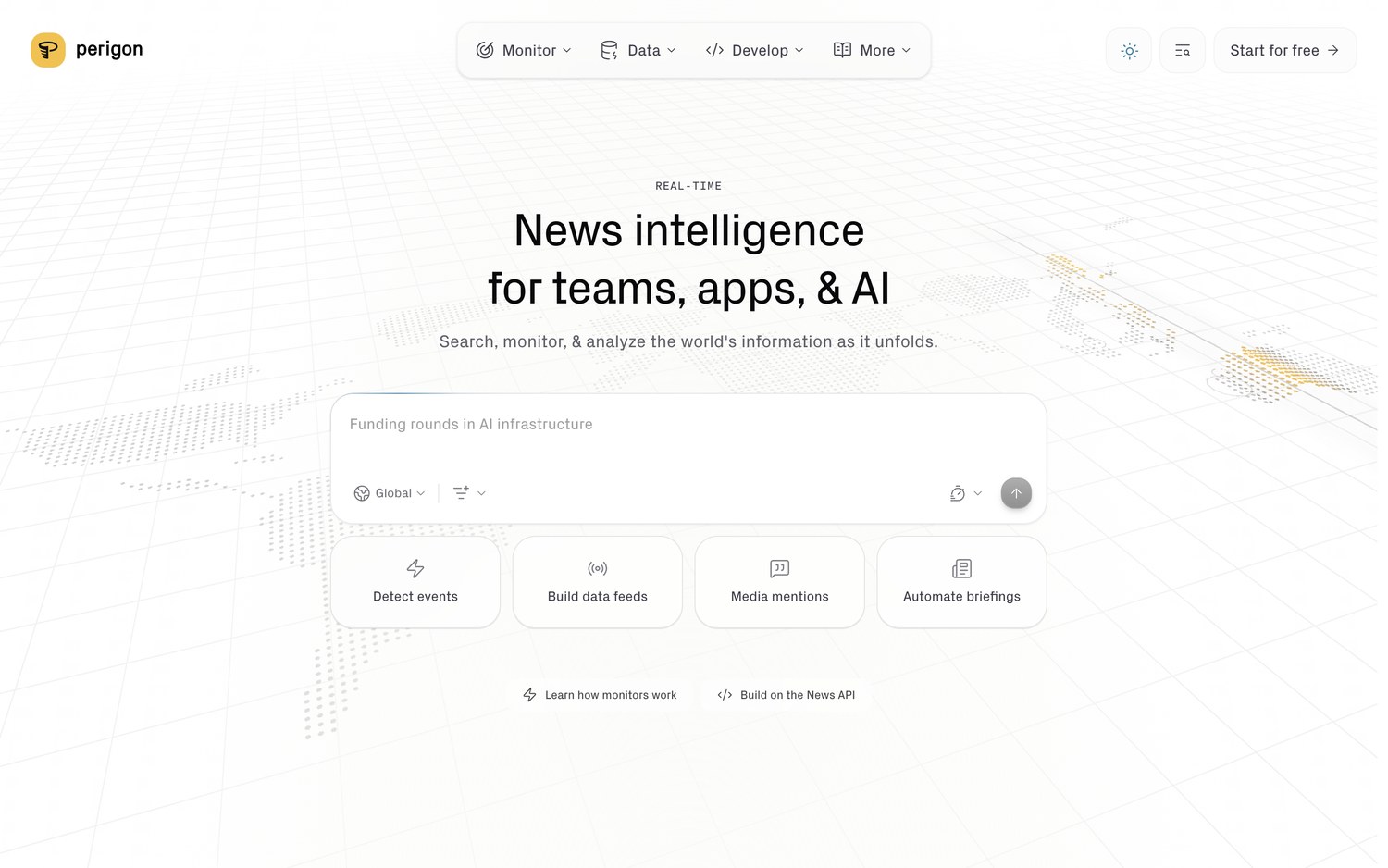
Perigon is a developer-friendly news API with a free tier capped at 150 API requests per month, full article body text, AI-enriched article data, story clustering, and MCP support for Claude. Paid plans start at $250 and $550/month for its self-serve startup tiers, with enterprise pricing on request; see Perigon pricing tiers and plans for details. It includes a Monitors API with webhook delivery via Contact Points, covering event detection, mention tracking, and scheduled briefings. It does not offer Leiden-based event clustering or custom validators. Best for cost-sensitive developers comparing news APIs with low initial commitment.
How do Google Alerts and top alternatives compare on key features?
The table above maps the most decision-relevant capabilities across the major alternatives. A few rows deserve closer attention before you choose.
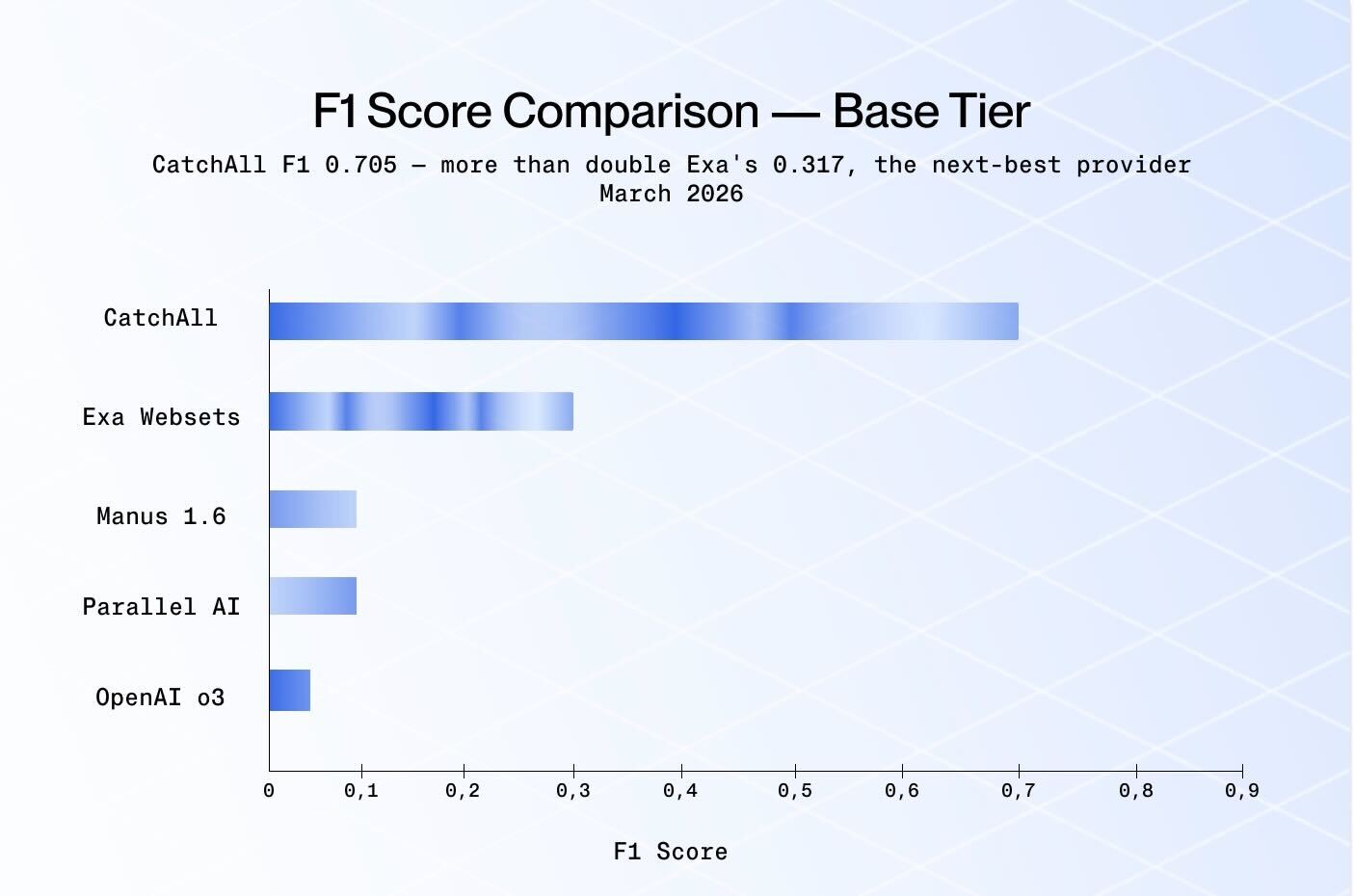
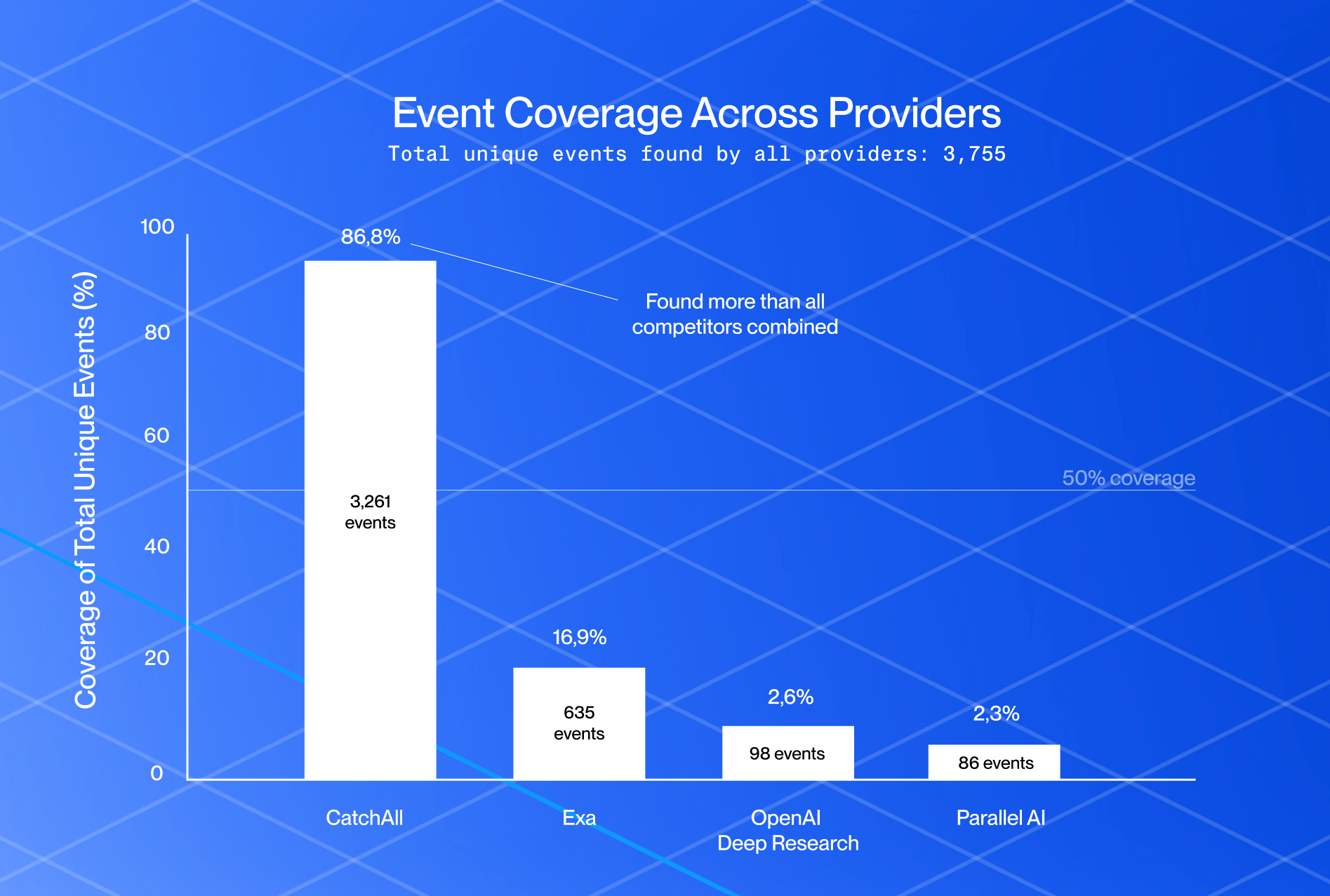
All five alternatives offer monitors and webhook delivery, so that row no longer separates them. What does separate them is at the event-discovery layer: NewsCatcher's CatchAll applies Leiden-based clustering to group related signals and deduplicate syndicated coverage automatically, and supports custom validators to filter results before delivery. Perigon offers story-level grouping but does not apply event clustering or custom validation logic. No other option in the table provides pre-delivery deduplication or validation, leaving that work to your own downstream code.
On pricing, the spread is wide. Google Alerts costs nothing but gives you no API access and email-only output. Contify and Signal AI both quote on request and target enterprise buyers. If you need JSON output at a predictable, self-serve cost, the realistic options narrow to NewsCatcher, Webz, and Perigon, since Contify's REST API access comes as part of a broader enterprise contract rather than a standalone developer tier.
Source depth varies too, though raw counts can mislead. A broader crawl without entity extraction or deduplication often produces more noise than a curated index with clean structured output, which is why recall beats precision for real-world AI research.
Which Google Alerts alternative should you choose?
Missed mentions, delayed alerts, and manual email extraction add up. The tools in this guide give you programmatic, API-backed options at every budget level, so you can match the right tool to where your monitoring needs actually are.
FAQ
Why do engineering teams outgrow Google Alerts so quickly?
Google Alerts has no API, no webhook delivery, and no machine-readable structured output beyond an undocumented RSS feed with no structured fields or delivery guarantees. Content is only surfaced after Google indexes it, and indexing lag can run 24 to 72 hours for newer or lower-authority pages. Its PageRank-biased index frequently misses government portals and niche regulatory publications.
When should you move from Google Alerts to a structured news API?
If you are feeding monitoring signals into a data pipeline, running entity extraction, or building recurring automated workflows, Google Alerts becomes a blocker and not a tool. The practical trigger is when you find yourself writing code to parse email digests or re-querying a source manually to catch what Alerts missed.
What features should you focus on when comparing Google Alerts alternatives?
Focus on three capabilities: structured JSON output so results are machine-readable without transformation, event clustering and pre-delivery deduplication so your pipeline receives clean signals rather than raw duplicates, and source depth that includes government portals and regulatory publications alongside high-PageRank news domains.
How does CatchAll differ from Perigon and Webz as Google Alerts replacements?
All three run recurring monitors with webhook delivery. The difference is at the event-discovery layer. CatchAll applies Leiden-based clustering to group related signals and deduplicate syndicated coverage automatically, and supports custom validators to filter results before delivery. Perigon's monitors track mentions and topic briefings but do not offer event clustering or custom validation logic. Webz provides deeper pre-2019 historical archives, making it the better fit for one-time archival research. Perigon suits cost-conscious developers who need a low-commitment entry point with a free tier, though it does not offer event clustering or custom validators.
Can you get full article body text from Google Alerts alternatives, and why does it matter?
Google Alerts and Signal AI do not deliver full article body text in their standard output. Perigon includes full article body text via its content field, available on all plans. Webz delivers full text alongside clean metadata per its News API documentation. A structured news API that returns full article body text is a concrete requirement for teams running entity extraction, fine-tuning language models, or building retrieval-augmented generation pipelines where snippets and headlines leave too many gaps.




.png)
.png)